M. A. Varghese and Family
This page was first created on 29 Aug 2026.
Updated 4 Sep 2026.
Biography
Papa and Mummy and later Mum - as told by M.A. Varghese’s daughter, Susheela and her siblings.
A Family Story Across Kerala and Singapore
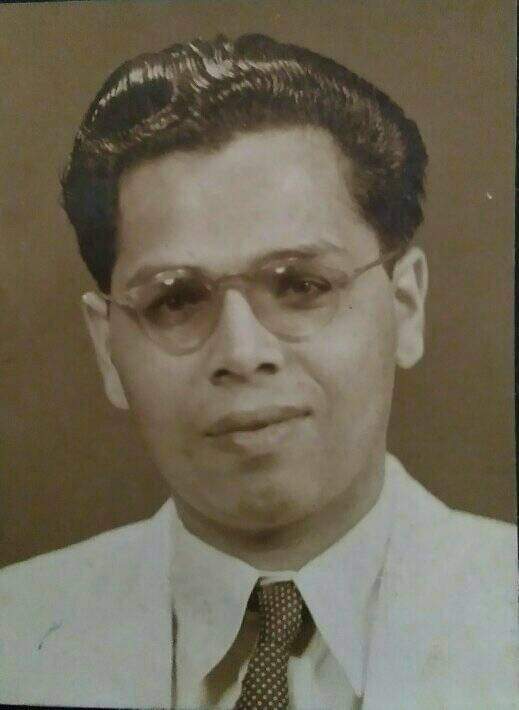
[MAV001] M.A. Varghese (Thankachen) in his younger years.
My father, M. A. Varghese, was born in Kerala in 1937 and came from the Marrett family. His maternal family was the Kaniyanthara family of Mepral/Paipad.
Kaniyanthara was a farming family, with extensive rubber and paddy plantations. Papa’s maternal grandfather, known in the family as Varghese Appachan, was a farmer who looked after these properties belonging to his siblings.
Papa’s name itself carries this connection. He was named Varghese after his maternal grandfather – being part of the same family naming tradition. The connections between the Marrett and Kaniyanthara families, and the way the different branches came together, form an important part of the family story.
The boy who crossed the sea
At about twelve years of age (1933), Papa’s life changed. He was sent from Kerala to Singapore to live with his maternal uncle, K. V. Philip, an engineer with the Public Works Department, and his family.
They lived in Punggol – the Upper Serangoon area where the road diverges to Punggol and Changi – and that is where he began his Singapore life.
Punggol was made up of farms, kampongs and open countryside all the way up to the fishing village by the Johor Strait. This would change when World War II began in 1939.
Papa went to Holy Innocents’ English School in the Punggol/Serangoon area, which later became known as Montfort School.
He was growing up in a Singapore that was still part of the Federated States of Malaya on the far reaches of the British Empire, but he was within a network of relatives and friends from Kerala.
The extended Kaniyanthara family already had an established presence in Singapore. His uncles K. V. Philip and K. V. Alexander worked for the PWD. Their cousin K. T. Alexander also joined them and worked as secretary to the Bishop. K. T. Alexander went on to become a lawyer and later District Judge in Singapore. His brother, K. T. Philip (teacher in Christ Church School and later in Anglo-Chinese Secondary School) joined the clan in 1953 and Papa’s own brother M. A. Joseph joined in 1952.
The wider family had a strong connection with the St. Thomas Syrian Orthodox Church on Topaz Road [it is now in Yio Chu Kang Road], which became an important centre for the Syrian Christian community and for the family’s social life in Singapore.
Papa was instrumental in translating to English the Malayalam order of worship for the benefit of the Singapore-born youngsters. He used taped recordings of traditional hymns to train the congregation in the pronunciation and improve the musicality of the chants. When an organ was introduced to church, Papa encouraged the formation of a choir and encouraged his niece, Sajini (M A Joseph’s daughter) to play the organ.
The war years
When the Japanese Occupation came in 1942, the lives of everyone in Singapore changed.
K. V. Philip’s wife and children were sent back to Mepral over concerns for their wartime safety. Papa stayed on, as the war gave him responsibilities far beyond those normally expected of a young man.
One of those stories is of Papa having to transport a heavily pregnant Mrs. K. T. Alexander and her daughter, Alexy, to the hospital for delivery. Japanese Occupation was a time of privation and for want of an ambulance or taxi, it was a wheelbarrow that came in handy.
When the sound of shelling was heard, Papa would scramble with Mrs. Alexander and Alexy into the safety of the nearest dry storm water drain. When the shelling stopped, they would come out and continue their journey.
Papa was still very young, but the responsibility of protecting others had already become part of his life.
His first job
Papa’s first job was obtained through his uncle’s friend Mr. Pisharody, who gave him a position as a clerk.
He was a young man finding his way in post-war Singapore when another life-changing event occurred. His parents in Kalloopara had found a bride for him and asked him to come home to wed.
And so, once again, Papa crossed the sea – this time going home to Kerala to meet the woman who would become Mummy.
Papa and Mummy
In 1948, Papa married Amini Zachariah, of the Kottakat family in Kayamkulam.
Mummy had experienced loss herself at a very young age. Her father died when she was three years old, and she was brought up by her mother’s family, Adangapurath, across the river from the Marretts in Kalloopara.
Papa and his young bride initially lived on Clementi Road in Bukit Timah, as a joint family with his uncles, K. V. Philip and K. V. Alexander.
It was there that their five children were born:
Alice (Alice Thomas) — 1950
Roy (Roy Marrett) — 1951
Sherry (Zach Marrett) — 1952
Georgie (George Marrett) — 1955
Susheela (Mary John Thomas) — 1959
Jalan Keruing, Seletar Hills
After both uncles retired and returned to Kerala, Papa bought a house on Jalan Keruing, Seletar Hills at the intersection of Jalan Kelulut, in 1960. This became the family home.
The neighbourhood had a strong connection to the people around St. Thomas Orthodox Church on Topaz Road. Papa’s cousin K. T. Philip had a semi-detached house on Jalan Kelulut. Family friends George Varghese and Elsie as well as the Peter Zachariah family also lived in Seletar Hills.
The family therefore lived within a community of relatives and friends who shared the same cultural and church connections. The house itself was in a corner plot with approximately 4,000 square feet of garden. Mummy grew fruit trees in the garden.
There was a back gate, and through that gate came one of the small memories that have survived from those years.
Georgie was still below school-going age. He would go through the back gate and play with the children of British RAF officers who lived nearby.
According to the family memory, Georgie became so comfortable speaking English that he was perhaps more English-speaking than Malayalam-speaking at that age.
There is even a family theory that this may have been where he developed his love of cheese.
Papa loved Kraft cheddar cheese, and Georgie was the only one of the children who seemed to share his craving for it.
As a teenager, Kraft cheddar became a special reward for Georgie.
Mummy
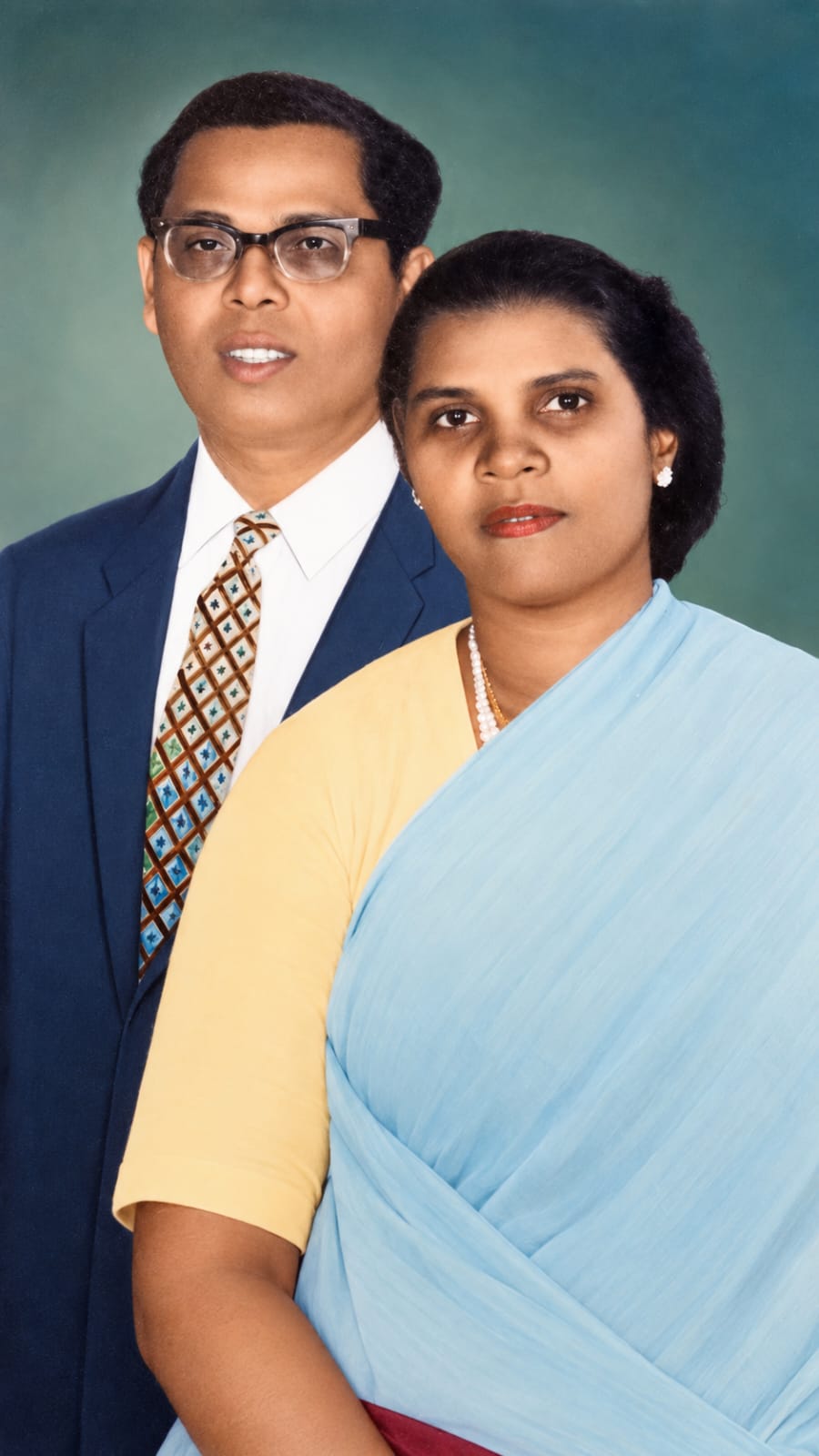
[MAV002] M.A. Varghese with Amini.
What the family remembers is that she was a calm, good-natured person, a wonderful cook and someone who looked after everyone.
She was particularly remembered for her fish curry, theeyal and neyyappam. On Remembrance Day, it was our family tradition for Mummy’s neyyappam to be distributed among the relatives. After Mummy’s death the practice was carried on by Marykutty Aunty, wife of Papa’s brother M. A. Joseph.
But her importance went far beyond cooking.
As a daughter-in-law who had married into the Marrett family, Mummy became one of the people who helped keep the extended family together.
Her work was largely within the home and the extended family, and therefore much of it was invisible in the conventional sense. But it was deeply valued.
Mummy also built connections of her own in Singapore.
Among the people who became close to her were Dr. K. T. Thomas and his wife Thankamma Aunty, who was also a doctor. Thankamma was the sister of one of Mummy’s classmates, and the two women became very close.
Mummy’s Illness
Around 1962, Mummy began suffering from constant diarrhoea and severe stomach pain.
She went to several hospitals, but the doctors could not find the source of her problems. It was Dr. K. T. Thomas who eventually suspected that the symptoms pointed towards cancer.
Mummy’s condition worsened.
Her final days were spent at Kandang Kerbau Hospital, known as KK Hospital. The matron nurse was Mrs. K. M. Thomas, who was also from the Syrian Christian community in Singapore. Her attending nurse was Ammal, Mrs. T. C. Joseph.
These women were among the people who cared for Mummy during her final days.
The local test results and diagnosis had been sent to London for confirmation. The report came back on the very day Mummy breathed her last.
On 10 June 1963, Mummy died of ovarian cancer, which had spread throughout her body.
She was all of 35 years.
She left five children:
Alice — 13
Roy — 11, just thirteen days before his twelfth birthday
Sherry — 10
Georgie — 8
Susheela — 3
Five children between the ages of three and thirteen suddenly without their mother.
The day Mummy died
For me, the youngest child, Susheela, the events survive largely through the memories of others.
After Mummy died, Dr. Pappachan Uncle and Molly Aunty came and took me to their home in the General Hospital quarters.
They had two daughters around my age and kept me with them while the funeral arrangements were made.
A few days later, they brought me to the funeral.
Molly Aunty was a talented woman who made clothes for her own children. She stitched a dress for me to wear for the funeral. The relationship between the families continued for decades.
When Mummy’s body was brought back to the house in Jalan Keruing, Elsie Aunty dressed her in a saree and laid her to rest in the coffin.
These are memories that Alice remembers.
For me, Susheela, who was only three, much of Mummy’s story would later come through the memories of my older siblings, uncles, aunts and the people who had known her.
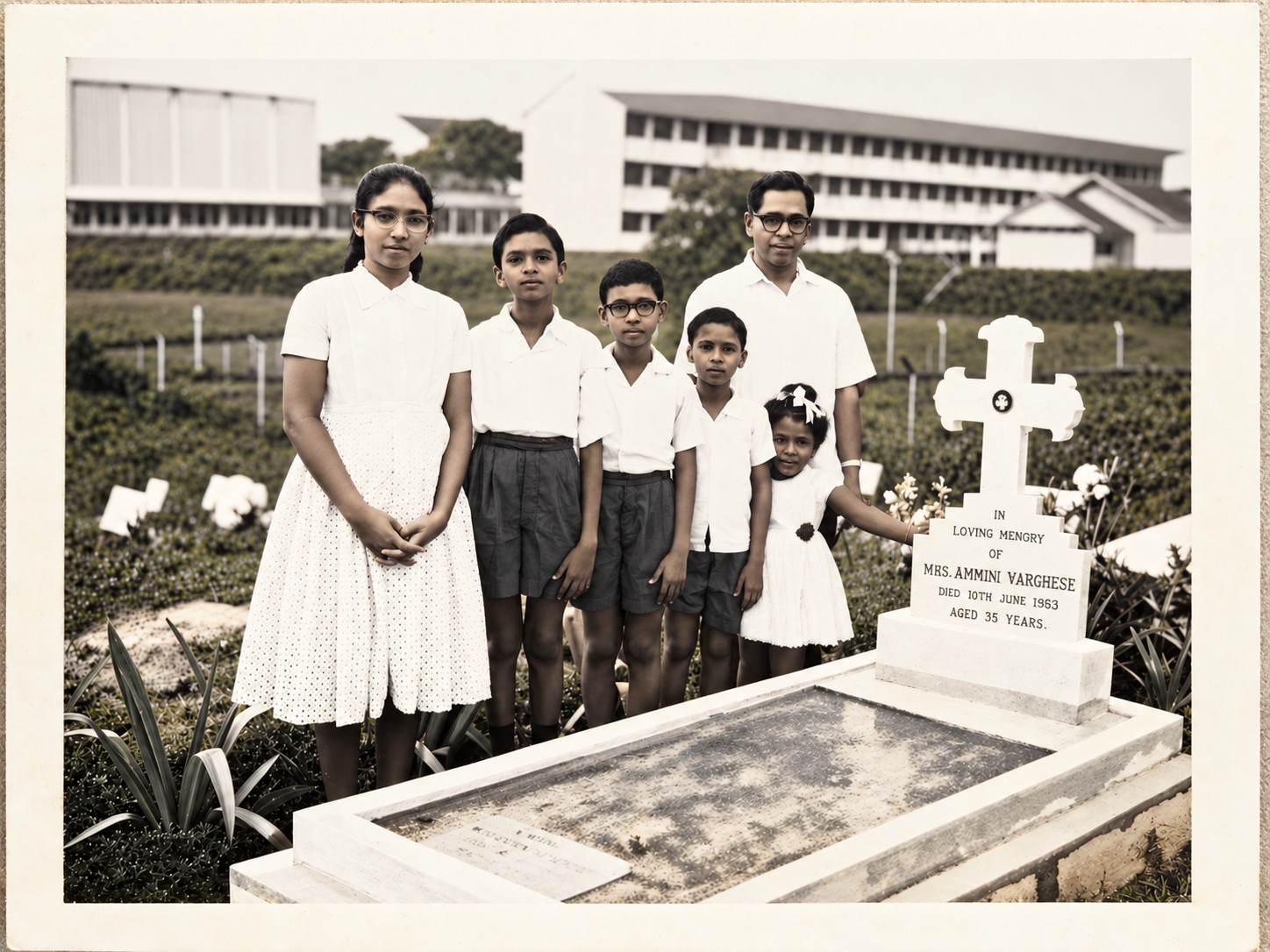
[MAV021] All of us at mummy’s grave.
The family after Mummy
Mummy’s death threw the family into disarray.
At 42, Papa was suddenly responsible for five children with a teenaged maid, Lakshmi running the house, while he needed to continue holding down the job.
The children were affected in different ways.
Roy was heavily asthmatic.
Sherry was mischievous and constantly challenging the authority of Alice, who was in charge of the home.
Georgie developed what the family remembers as a rheumatic condition affecting his brain and involuntary movements. He was hospitalised for about a month.
With so much happening at home, Papa found himself unable to manage everything alone.
I was only three.
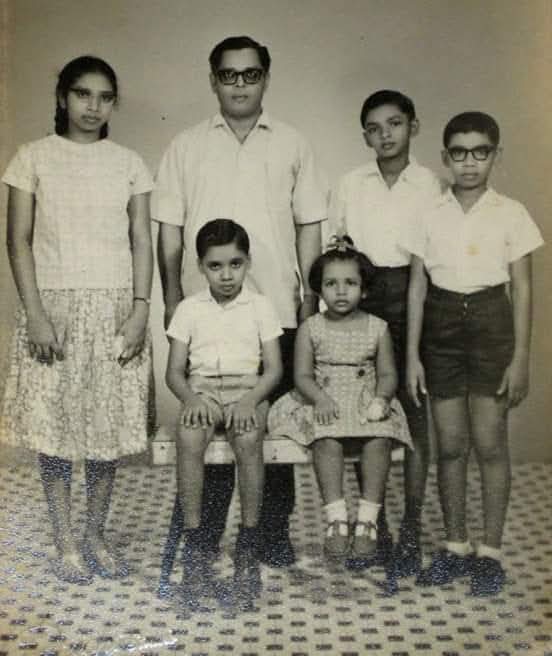
[MAV003] A family photo after Amini passed away.
Standing left to right: Alice, Thankachen, Roy and Sherry.
Sitting: Georgie and Susheela.
I was sent to Johor Bahru for a year, to stay with a childless couple, Mr. T. D. Thomas and Molly Aunty.
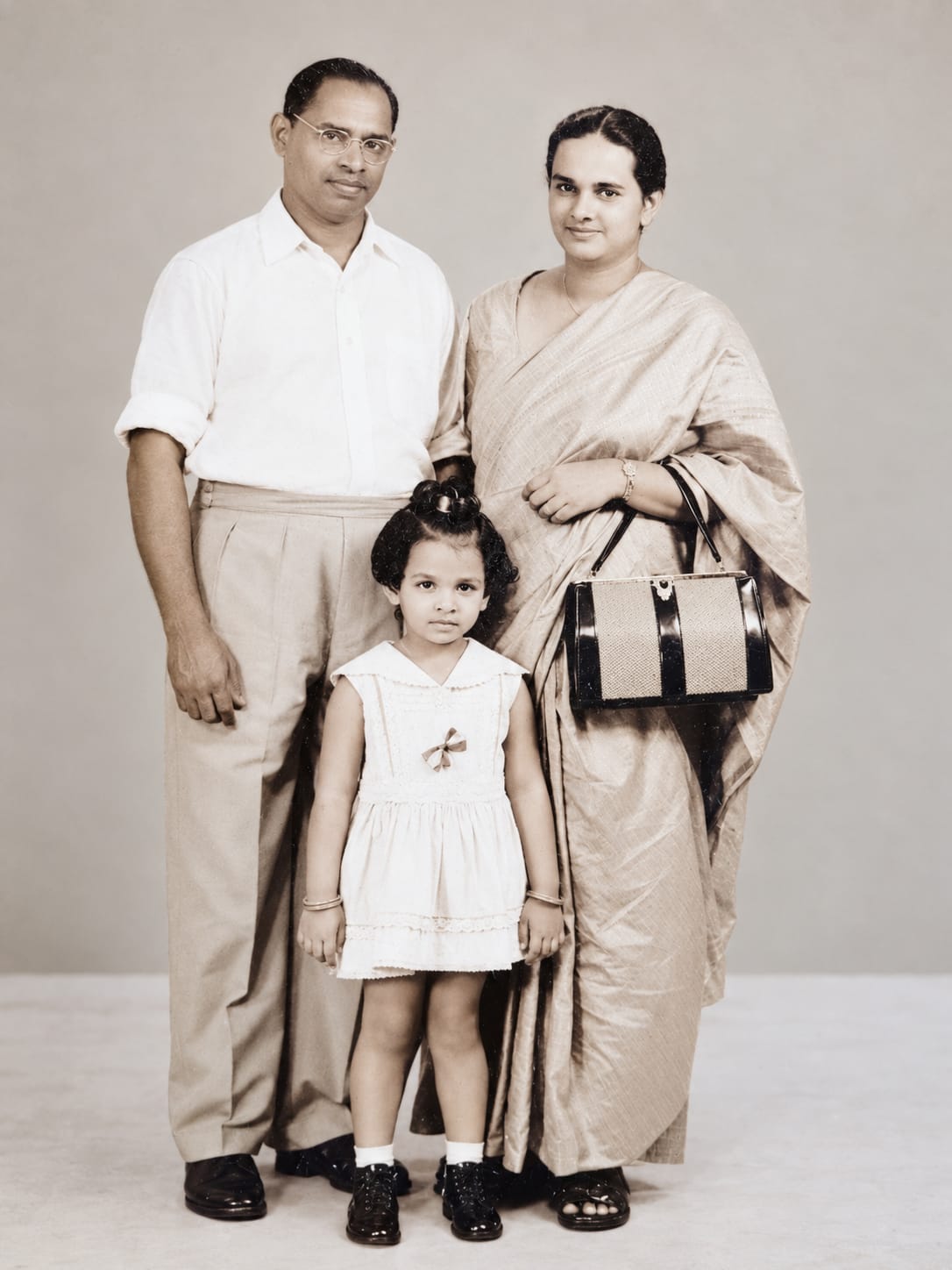
[MAV028] T. D. Thomas, Molly and Susheela.
They became Koch Uncle and Molly Aunty to me. They loved and cared for me, and a lifelong bond remained until their deaths.
Koch Uncle had an elder brother whom I called Valliya Uncle. He was unmarried.
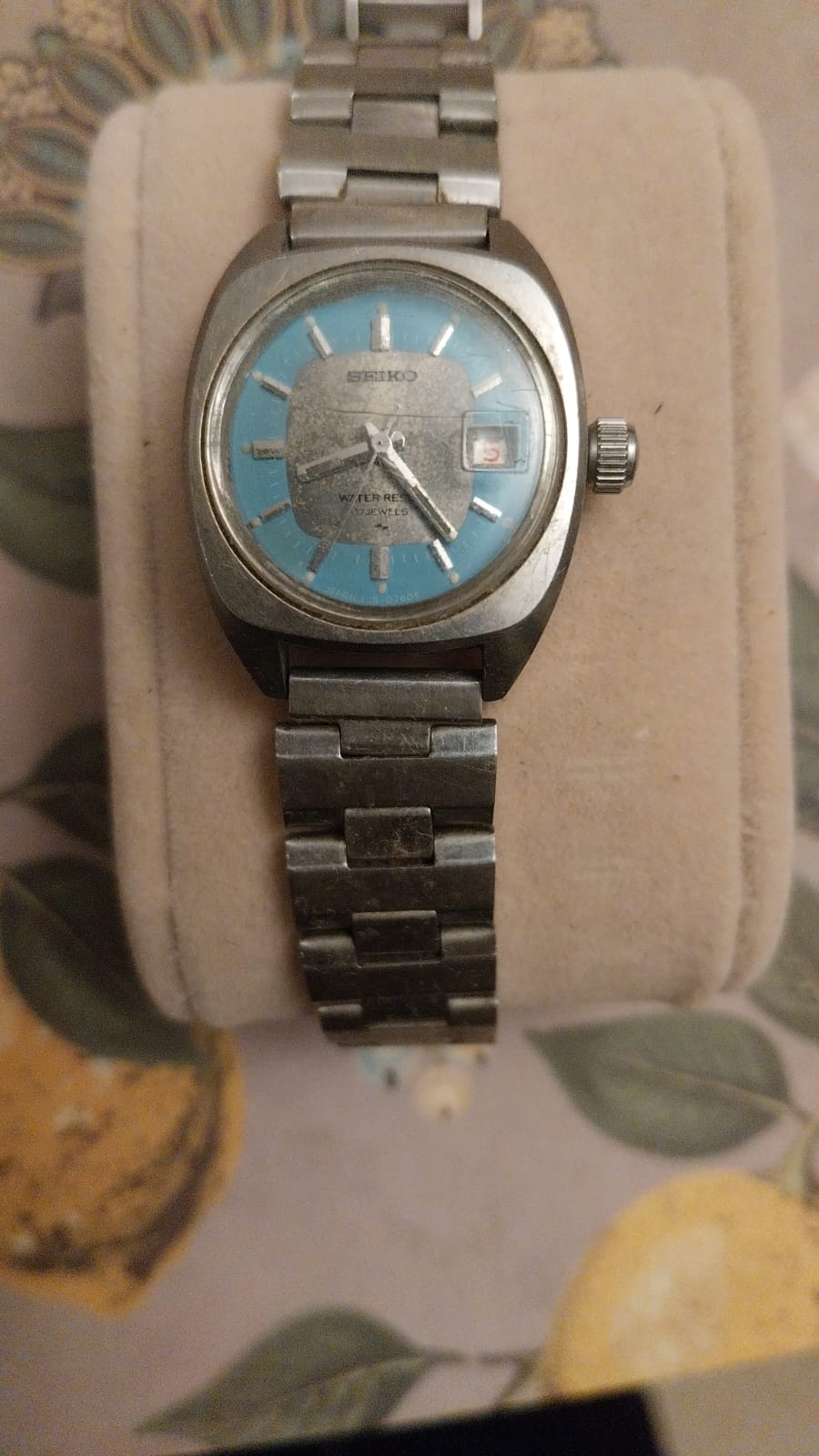
When I turned 13, Valliya Uncle and Koch Uncle pooled together to buy me my first watch – Seiko with a blue dial. The watch itself was a precious gift, but even more precious was what it represented: the love of this family who had cared for a little girl when she had lost her mother.
I still keep the watch as a memento of their love.
The McDonald House bombing
By March 1965, Papa was working for Harrisons & Crosfield, whose office was in McDonald House on Orchard Road.
One day, Papa was late getting to the office because he had an errand to run. The family is not certain whether he had been visiting Georgie in hospital before going to work.
That day, two Indonesian terrorists placed an 11-kilogramme bomb in McDonald House. The explosion caused extensive damage and people were killed.
Papa was saved because he was not yet in the office.
For a father already struggling to care for five children after the death of their mother, the incident brought home a frightening reality:
What would happen to his children if something happened to him?
The family believes that this became an important impetus for Papa to make arrangements for the children to move to India, where trusted relatives and friends could care for them if he were no longer there.
His friend Mr. P. S. Mathew, known as Vaidyan Uncle, helped him.
Papa moved into a shared accommodation with Vaidyan Uncle, while the house at Jalan Keruing was rented to RAF officers.
The rental income also helped Papa financially with the cost of supporting the children while they were living and studying in India.
The decision to send the children away was therefore not simply about education.
Mummy was gone.
The children were struggling with illness and separation.
Papa was trying to manage five children while working.
And he had just experienced how easily his own life could have been lost.
He needed to know that, whatever happened to him, his children would be safe.
The children are scattered
The children were sent to different places in India, into the care of trusted people and families.
Alice and Georgie went to Stanes High School in Coonoor, where the principal was Miss A. Cheriyan, a pioneering Indian educator and the first Indian principal of that Anglo-Indian school in the Nilgiris.
Roy and Sherry went to Trivandrum, where Mummy’s sister lived, and attended Loyola School.
I was sent to my paternal grandparents in Kalloopara, Kerala.
For a period, the five children were therefore separated across Coonoor, Trivandrum and Kalloopara.
Mum / Anpu / Anna - Jalan Chermat, Upper Paya Lebar Road
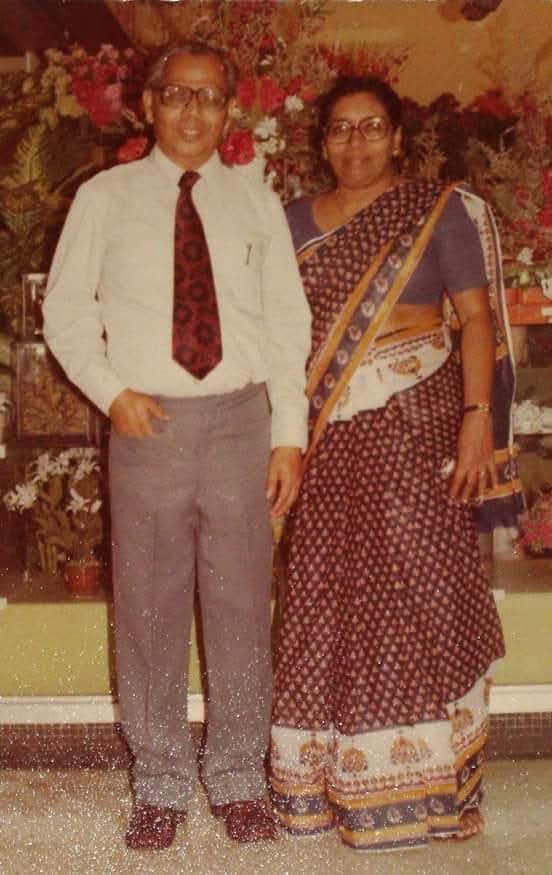
[MAV004] M.A. Varghese with wife Anpu.
In 1966, three years after Mummy’s death, Papa remarried.
His second wife was Anpu, known as Anna Cheriyan, of the Ayrookuzhiyil family.
She was connected to Mummy’s family — she was the sister of Mummy’s brother’s wife. She was also the principal of the boarding school in Coonoor where Alice and Georgie were studying.
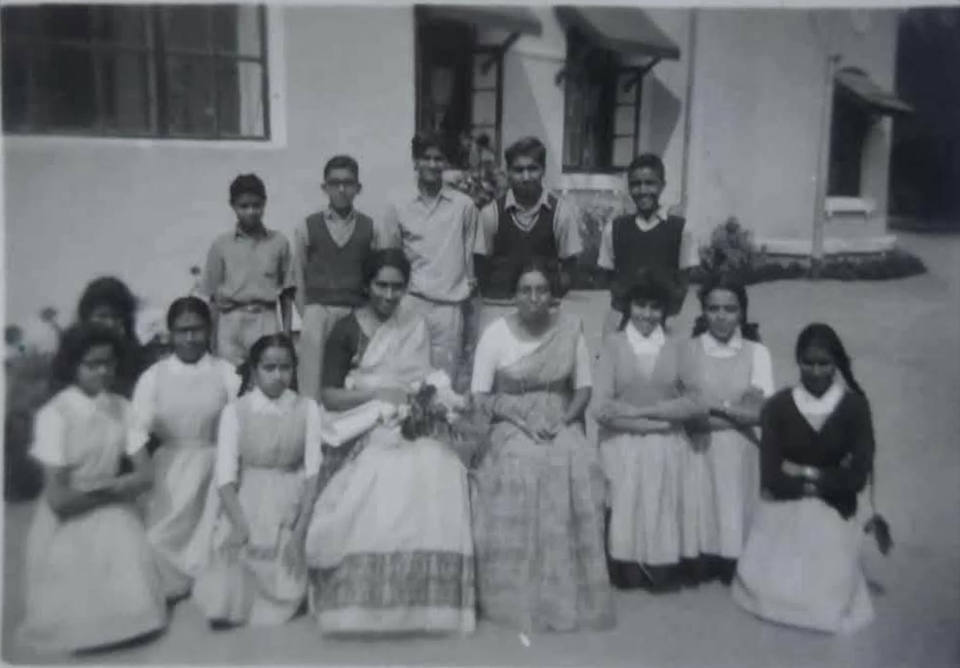
[MAV025] Mum at Stanes High School, Coonoor.
On the right - Anna Cheriyan (Mum) as the principal of Stanes High School Coonoor with her sister Dedy Elizabeth Cheriyan (who was also a teacher in the same school). Dedy married Mummy (Amini’s) younger brother Babychyan (Alex). Babychyan went on to study engineering in UK and settled there.
Anna’s own story deserves to be told separately.
After the marriage, Papa brought Sherry, Georgie and me back to Singapore.
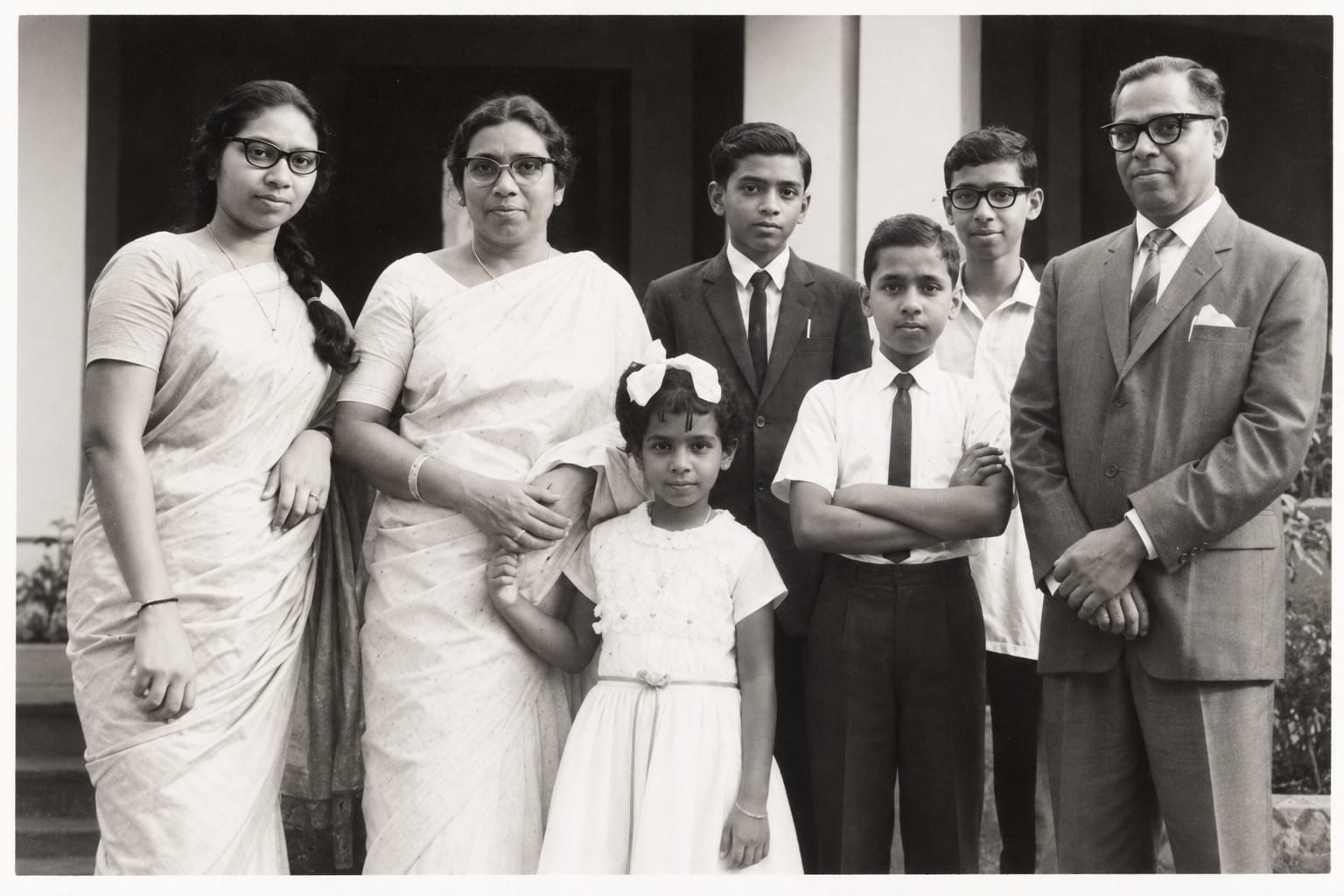
[MAV029] Papa and Mum on their wedding day with the children.
Papa’s career also flourished. He was head-hunted to head the Claims department of Barber Blue Sea which had its offices in Ocean Building opposite Collyer Quay. He became Claims Manager for South East Asia.
Sherry and Georgie went to St. Gabriel’s School in Upper Paya Lebar, while I attended Paya Lebar Methodist Girls School.
The family was beginning to come together again.
Roy who remained in India to complete his B.Com education, joined the family in 1973 after graduation.
Alice finished her education in Stanes High School and later married Lt. Col. Thomas Varghese and lived in many places in India. Her story continued as an army wife in India.
Papa’s association with the St. Thomas Orthodox Church on Topaz Road continued, and he eventually became a trustee of the church. When the government wanted to acquire the church property for the construction of a flyover, Papa was instrumental in negotiating suitable compensation for the church.
There was some discussion about renting another church as an alternative venue for services, but Papa was adamant that a new church should be built — not just for the present congregation, but for future generations. He believed that children who were immersed in Singaporean culture six days a week needed the strong influence of the Syrian Christian community and the church to help keep families connected to their faith, traditions and to one another. He was one of those parents who encouraged the annual youth camp for the Singapore Malaysia diocese. He felt that these friendships would expose the younger generation to each other.
Papa was very much a Singaporean at heart, but he never forgot his roots.
I remember the purchase of the plot of land on Yio Chu Kang Road, and the decision to sell part of it to help finance the construction of the church. I also remember the architectural plans spread out on our living-room carpet, with Papa meticulously going through every detail. He was particularly concerned that the new church should include proper accommodation for the parish priest and his family, something that had been lacking in the Topaz Road parsonage.
It was a labour of love for him — a project that brought together his faith, his sense of responsibility to the community and his belief in the importance of preserving their heritage for the next generation. It was also one of his last major projects in Singapore before he returned to Kerala in 1981.
Coming home to Kerala
When Papa retired in 1981, he moved to Puthencavu, Kerala, and brought his mother, Aleyamma, whom we called Ammachy, to live with him.
Papa’s decision was deeply personal.
He had never really lived with his mother.
Even during the twelve years he spent in Kerala before going to Singapore, he had been raised in Paipad rather than Kallooppara.
Why he was raised in Paipad instead of in Kalloopara with his parents, and what happened in those early years, is another part of the family story still to be told.
There was also a practical reason for bringing Ammachy home.
Papa’s younger brother, Rev. Fr. Abraham Marrett, had been posted to Kuala Lumpur and wanted to take his family there.
Their father, M. C. Abraham (Appachan), died in 1977.
This meant that Ammachy would be alone in Kalloopara if achen’s kochamma (wife) and children went away.
Papa bought Cheribhavan, Mum’s family home in Puthencavu, and renovated it to combine modern conveniences with the traditional character of the family house.
There, Papa, Mum and Ammachy made a home together.
Ammachy enjoyed those years enormously.
After a lifetime in which circumstances had kept her apart from her son, she flourished in the home Papa had created for her.
For Papa, bringing his mother home was perhaps also a way of closing a circle that had begun when he was a boy.
The final years
Ammachy died of old age in 1991. She was 91 years old.
Papa lived for another three years.
He developed Parkinson’s disease and became bedridden from September 1993 until his death on 2 March 1994.
He was 72.
Papa’s death affected Mum deeply. They were a devoted couple, and Papa had been the love of her life.
She died on 6 January 1996. She was 73. Both of them were born in 1921 and Mum was only 8 months younger than Papa. Both were buried in the Orthodox Cathedral Church in Puthencavu.
In 2002 when the Singapore government exhumed Mummy’s remains in the course of acquiring the Bidadari Cemetery land for public housing, we brought her remains in a blue ceramic pot and placed it along with Papa and Mum’s remains in the Cathedral vault in Puthencavu. With that, Vault No.37 bearing the name Marrett Cherry Bhavan was sealed.
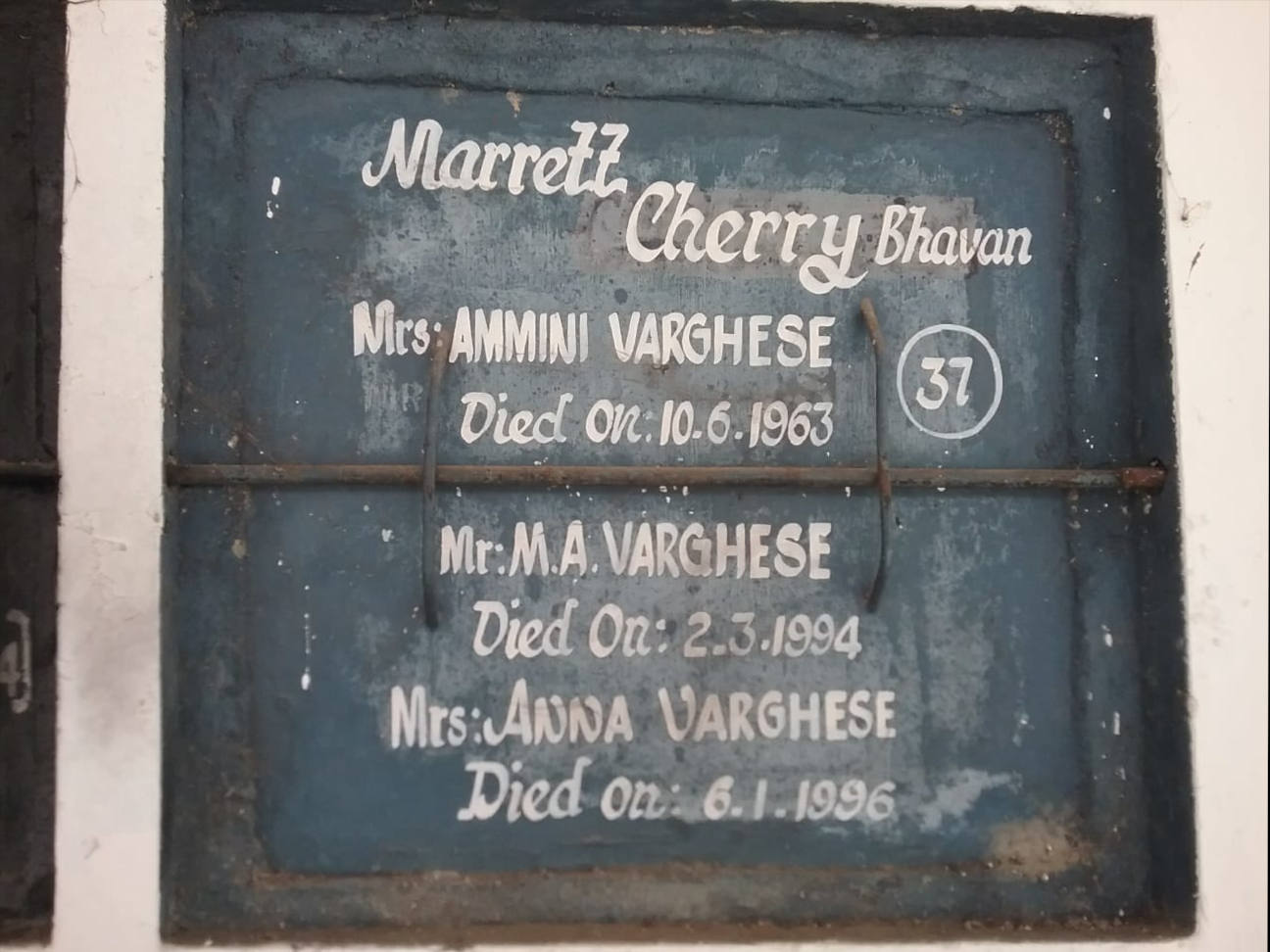
[MAV027] The Cathedral vault in Puthencavu
Photos of M.A. Varghese
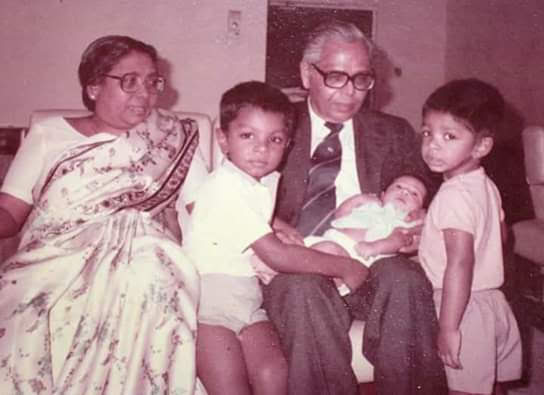
[MAV005] M.A. Varghese with Anpu and Roy’s children.
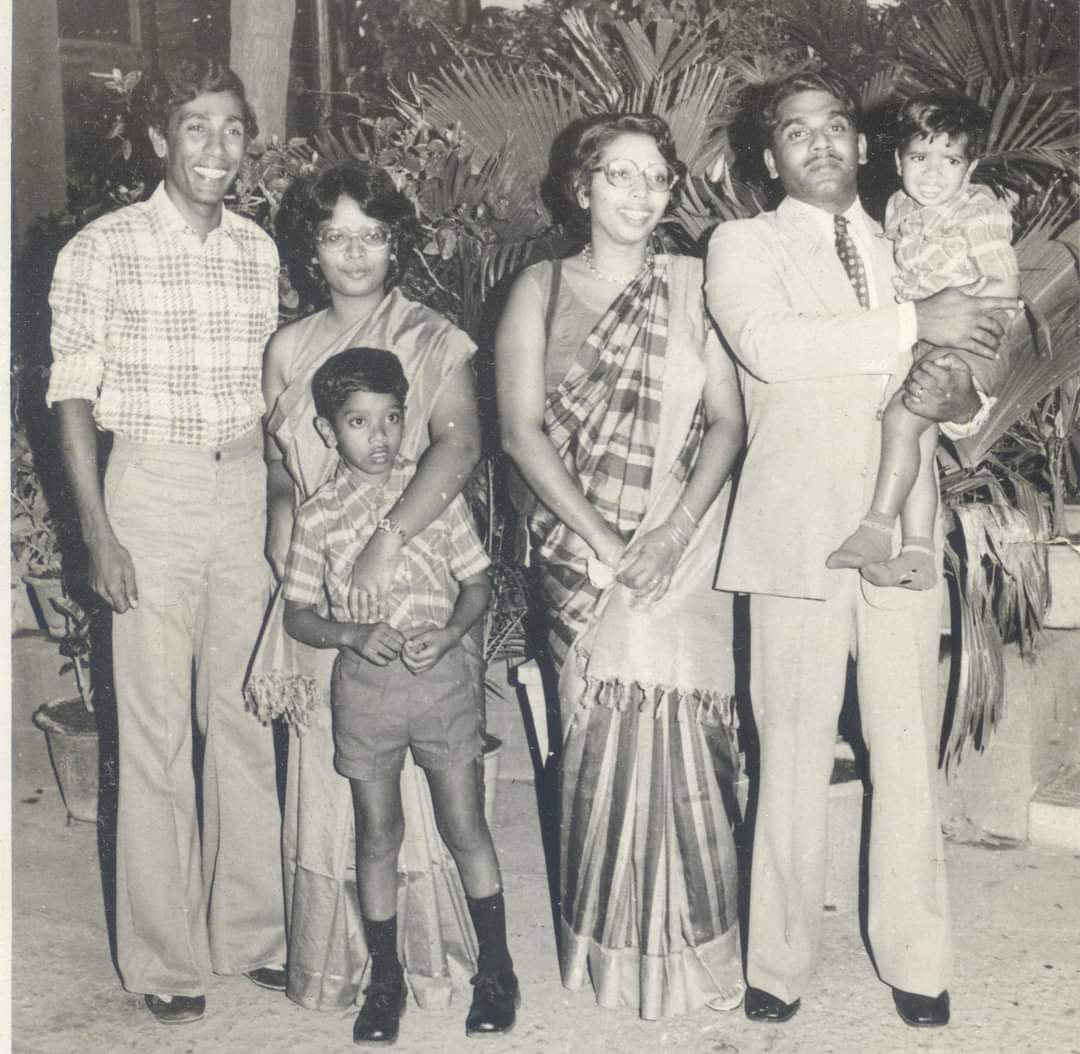
[MAV006] M.A. Varghese’s daughters.
Left to right: Jokutty and Susheela, Alice and Tomy with children Vinay (standing) and Nitin.
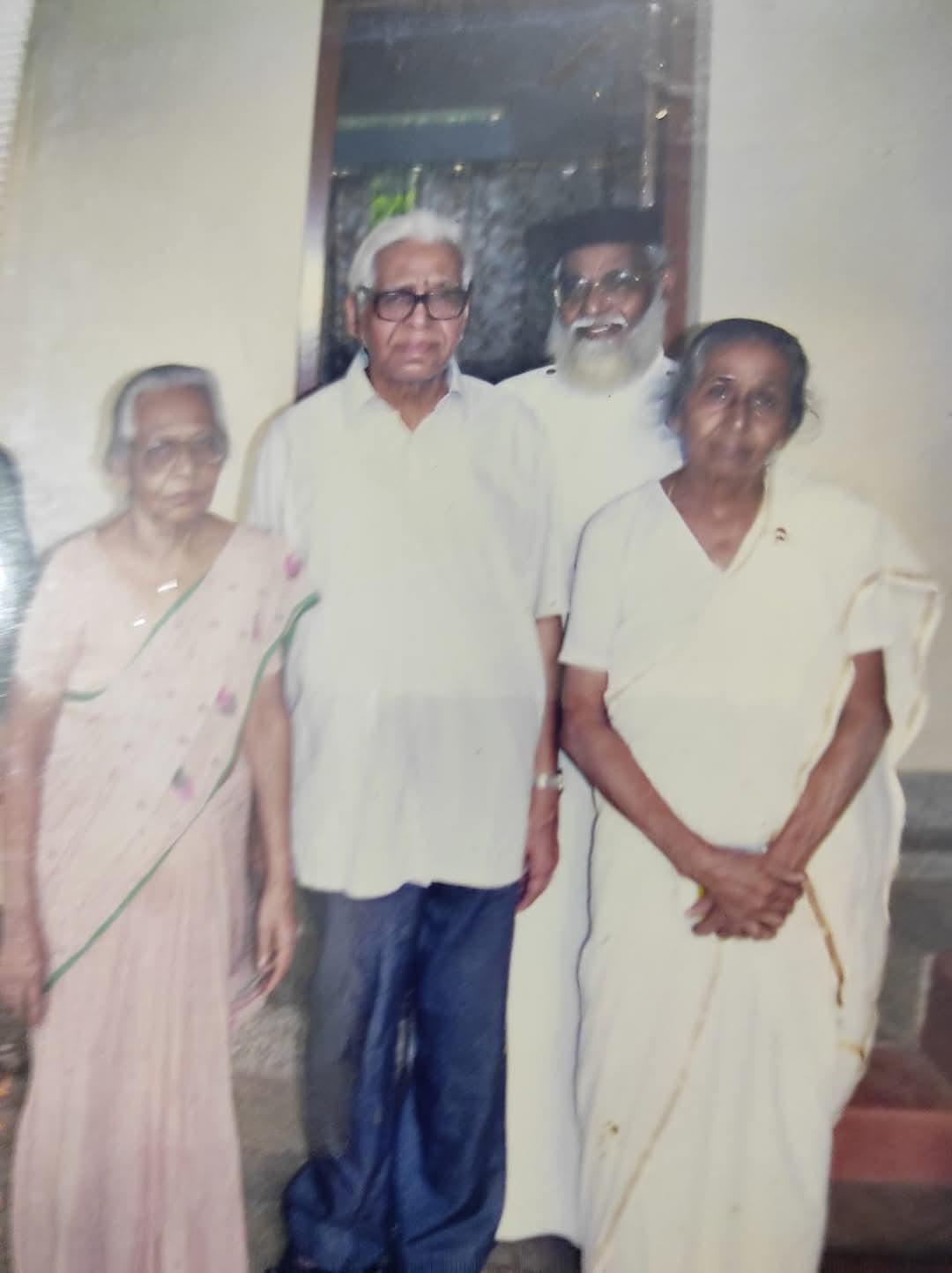
[MAV007] M.A. Varghese’s siblings - Kunjamariamma, M.A. Joseph, Rev. Fr. Abraham Marett (Achenuppapan) and Sosakutty.
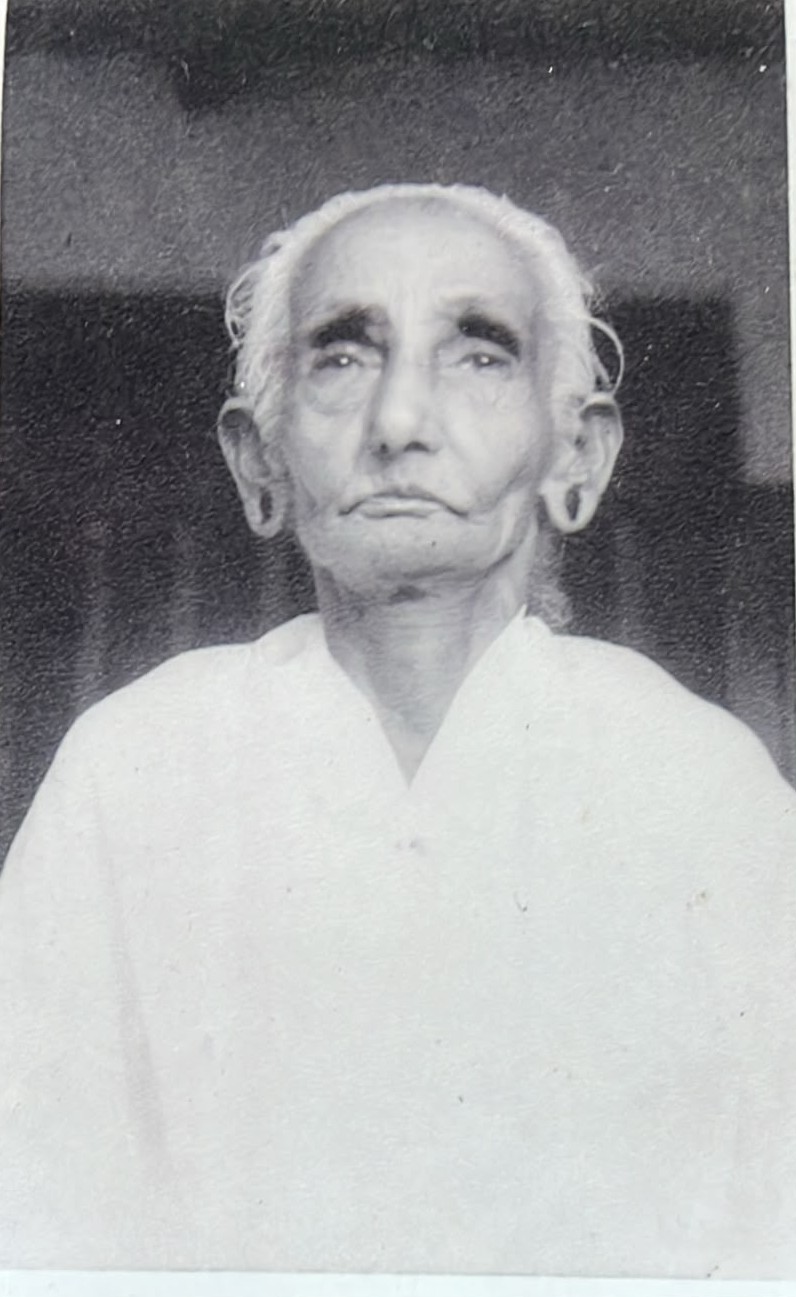
[MAV008] M.A. Varghese’s maternal grandmother - Kaniyanthara Varghese appachen’s wife.
This grandmother is also K.T. Philip’s father’s brother’s wife.
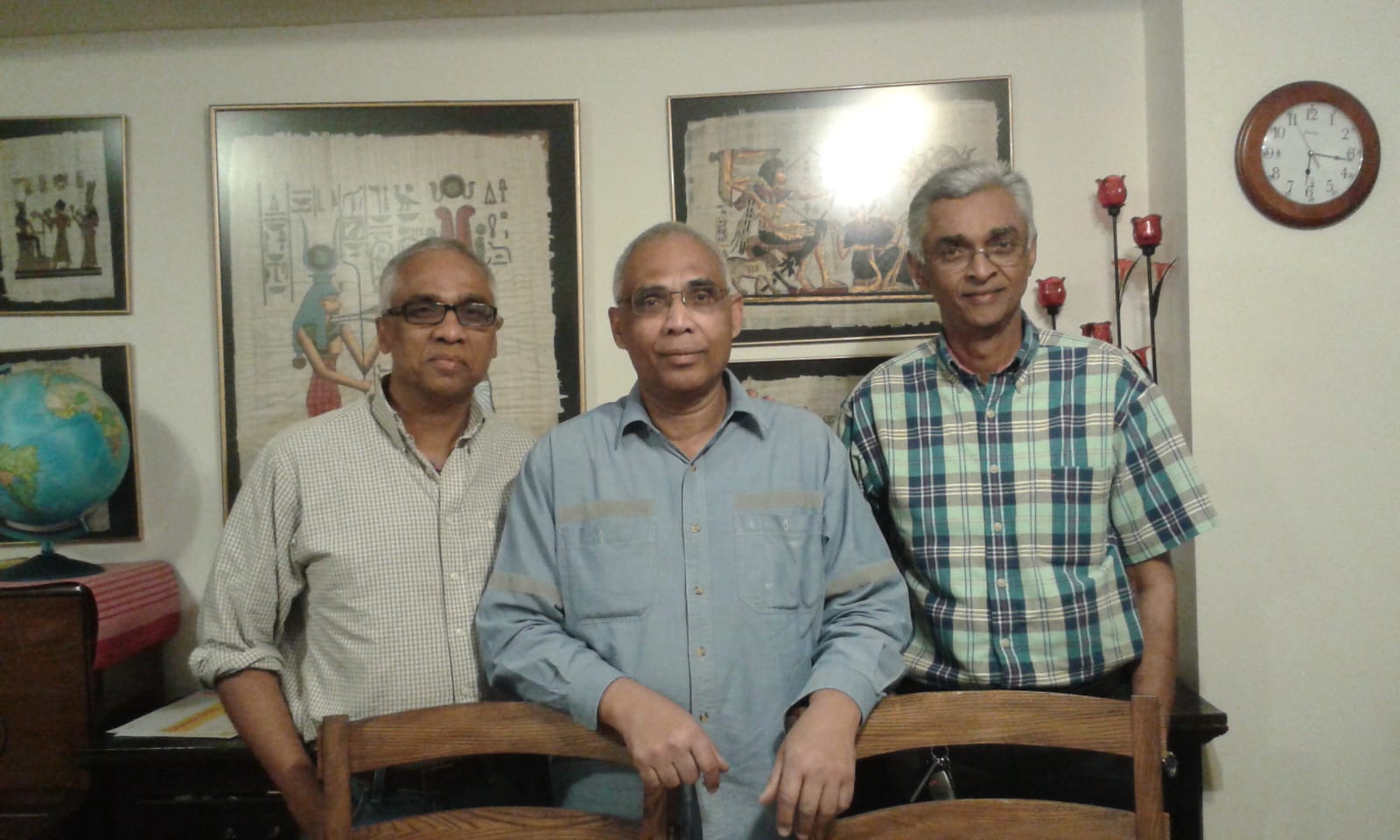
[MAV009] M.A. Varghese’s sons Georgie, Sherry and Roy.
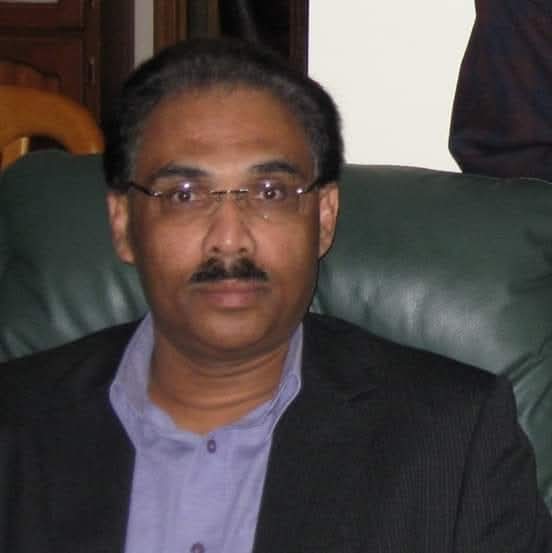
[MAV010] M.A. Varghese’s son, Sherry who passed away on 2 Oct 2019 in Sydney, Australia.
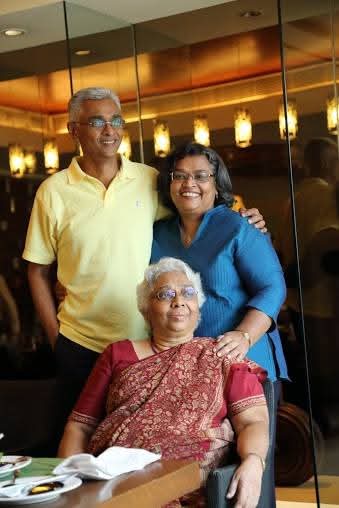
[MAV011] M.A. Varghese’s children, Alice, Roy and Susheela, taken around 2014.
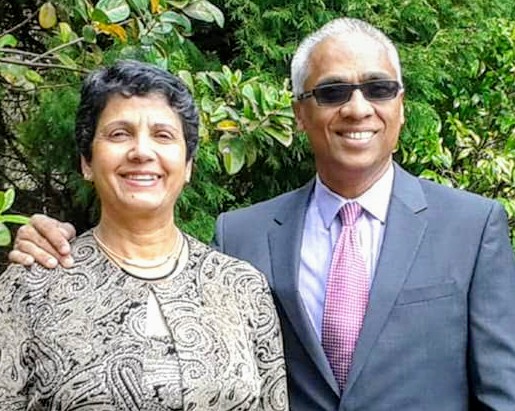
[MAV012] Georgie and wife Thangam.
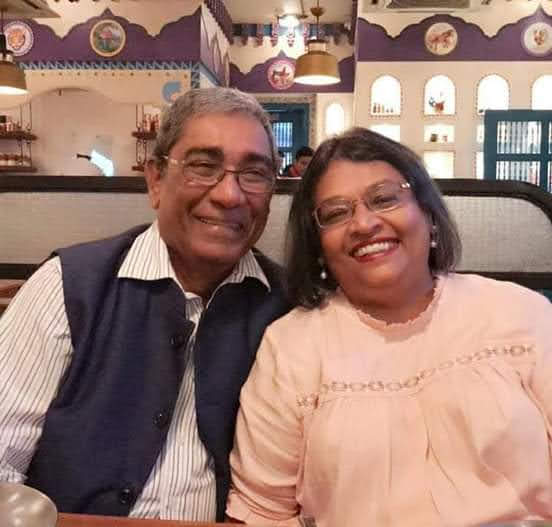
[MAV013] Husband Jokutty and Susheela.
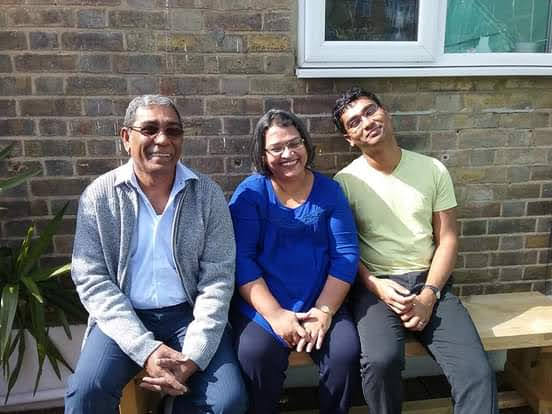
[MAV014] Jokutty, Susheela and son Aashish.
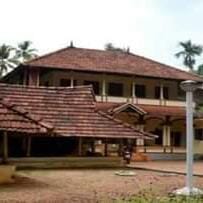
[MAV015] M.A. Varghese’s ancestral home in Kalloopara, Kerala, South India.
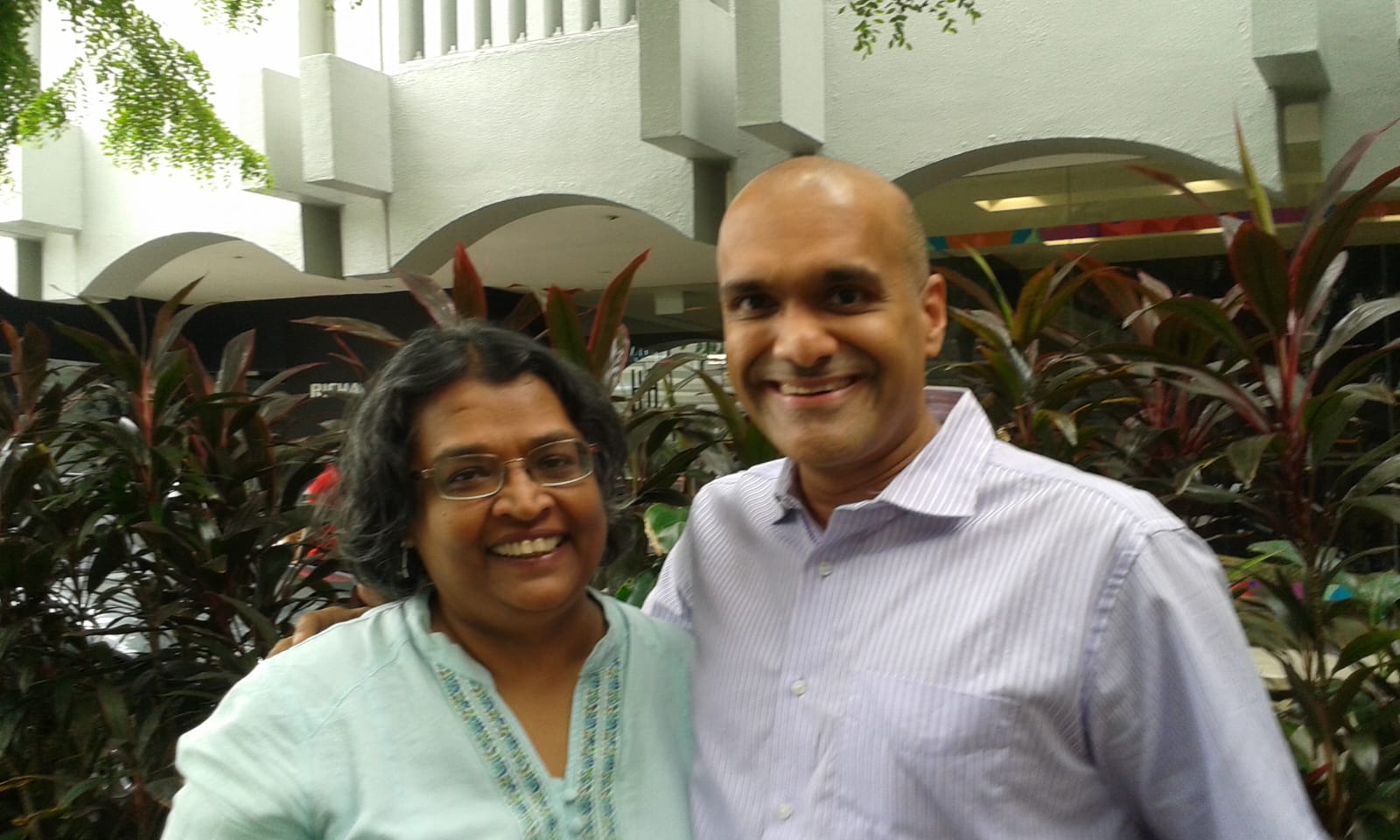
[MAV016] Susheela and Manoj (K.T. Philip’s son) in Singapore.
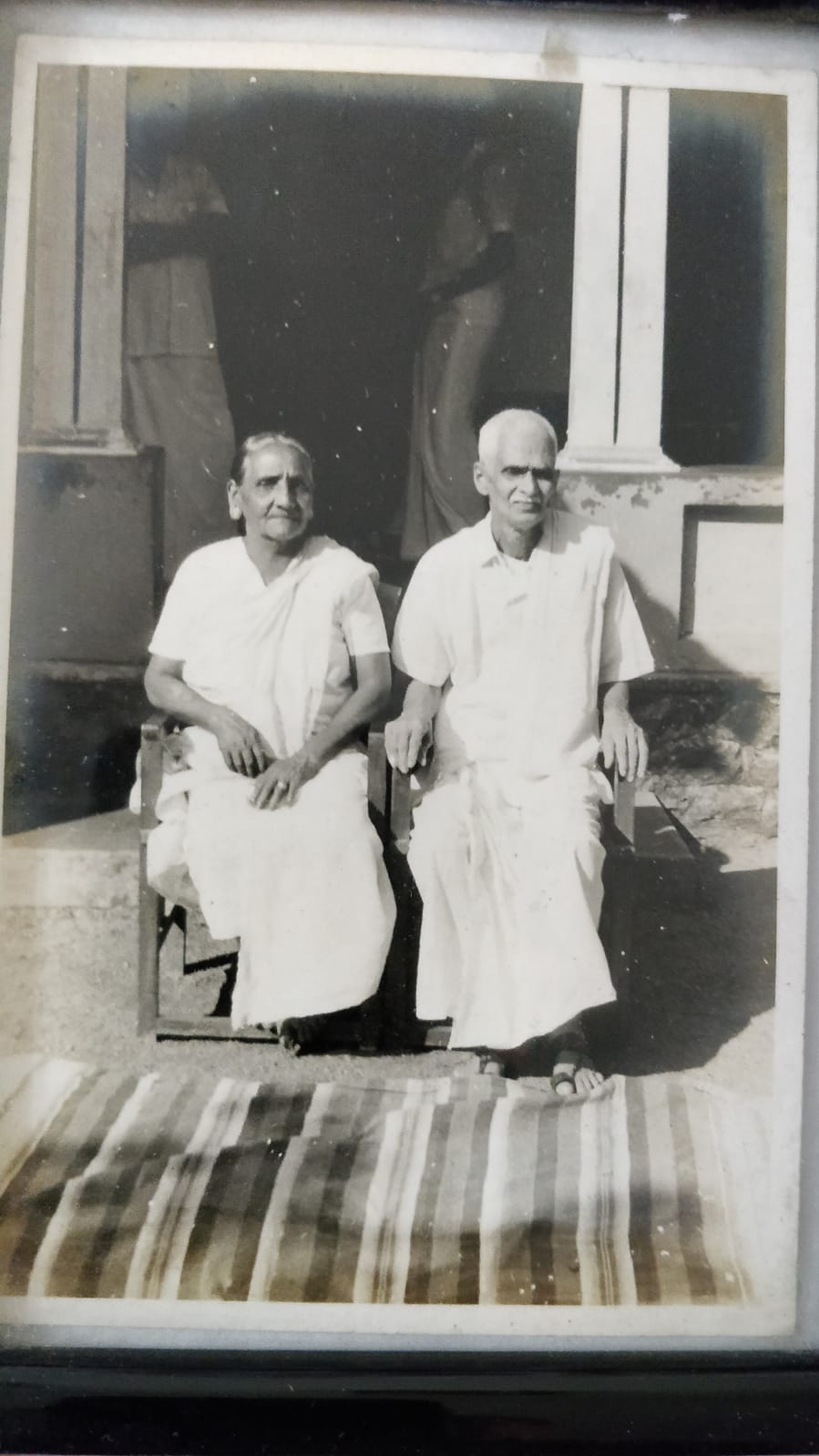
[MAV017] M. C. Abraham (Marrett) and Aleyamma Abraham (Kaniyanthara) - parents of M. A. Varghese, Sosakutty, M. A. Joseph, Kunjamariamma and Fr. Abraham Maret.
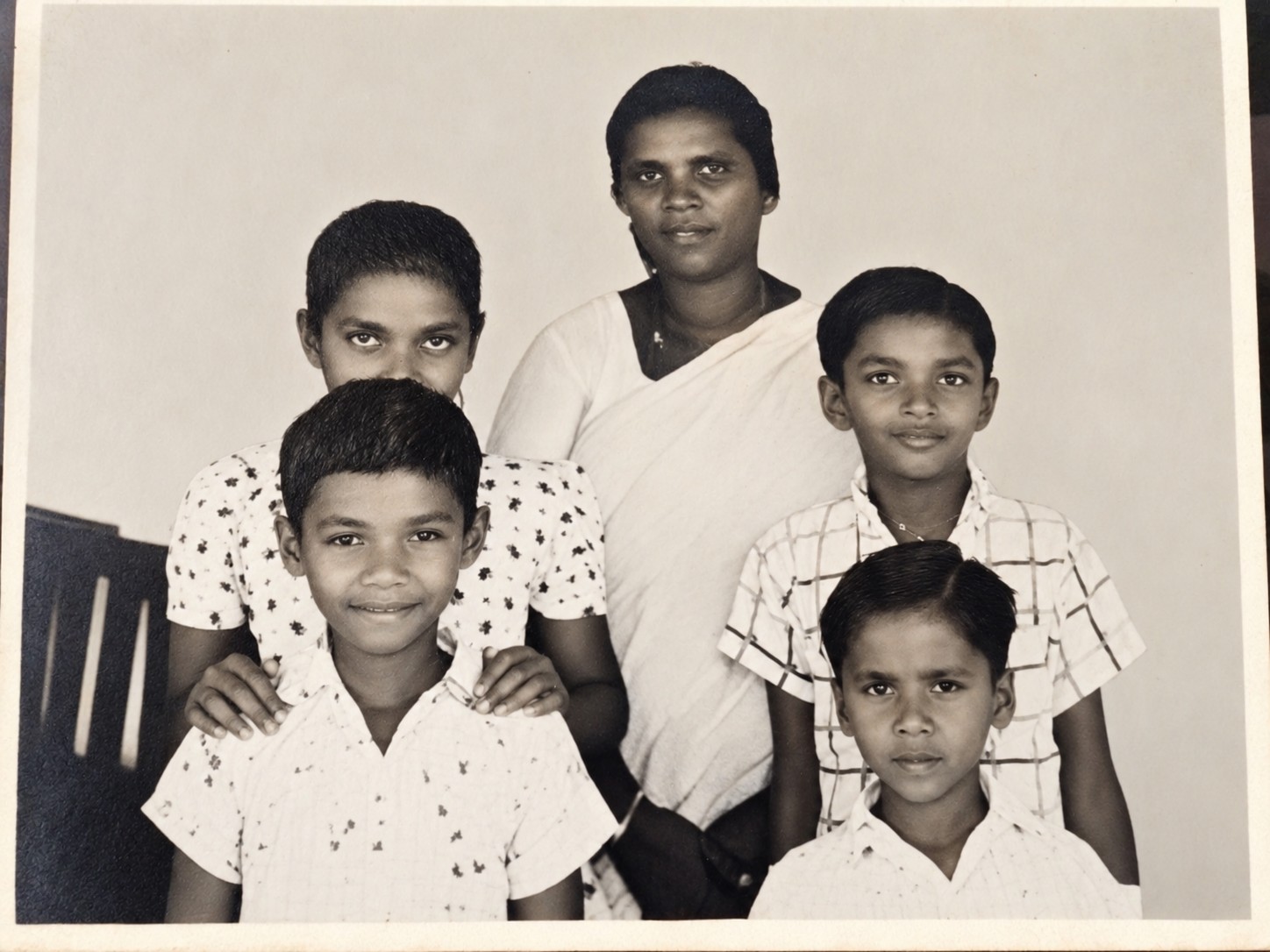
[MAV020] Mummy with Alice and the boys.
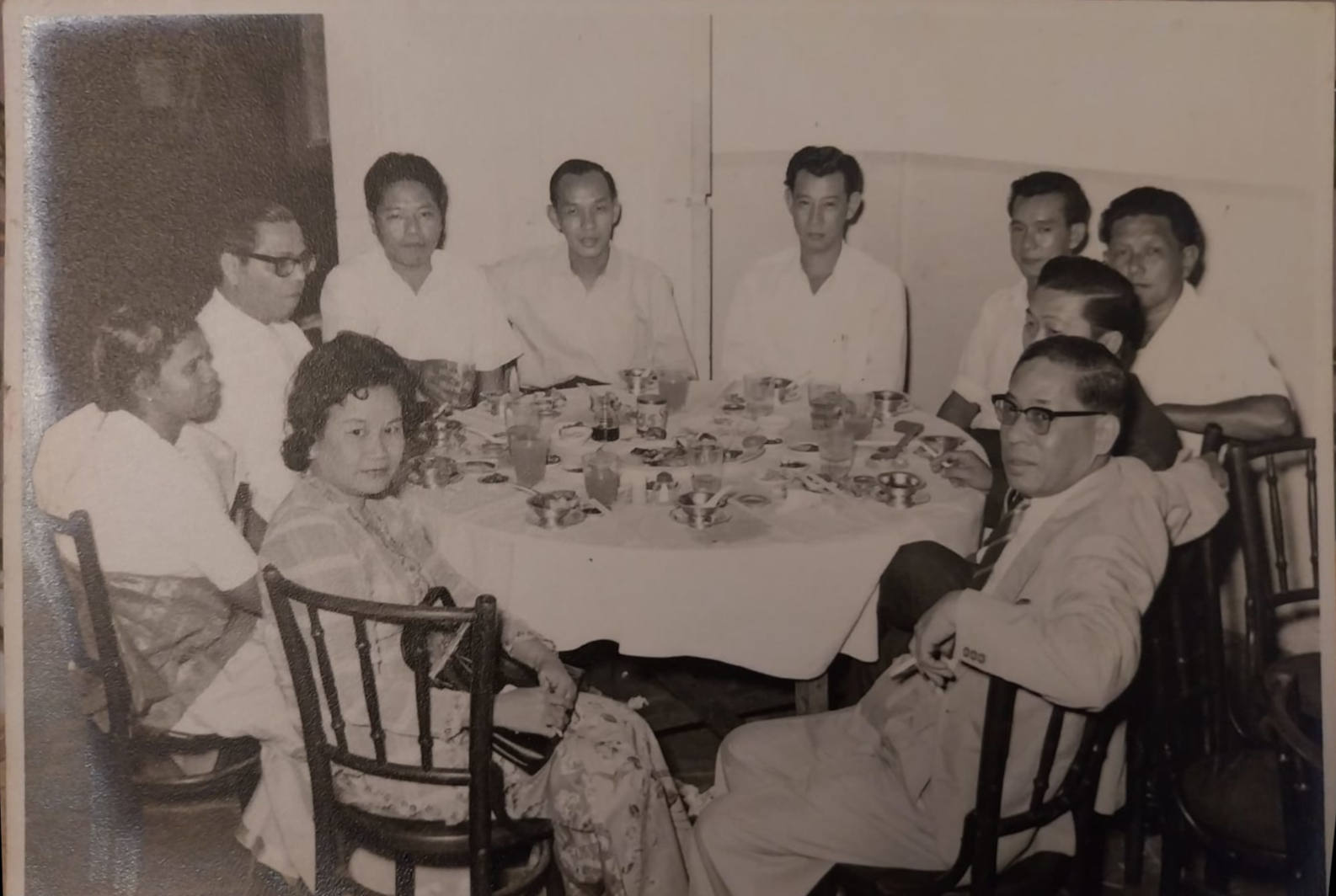
[MAV022] At a work dinner.
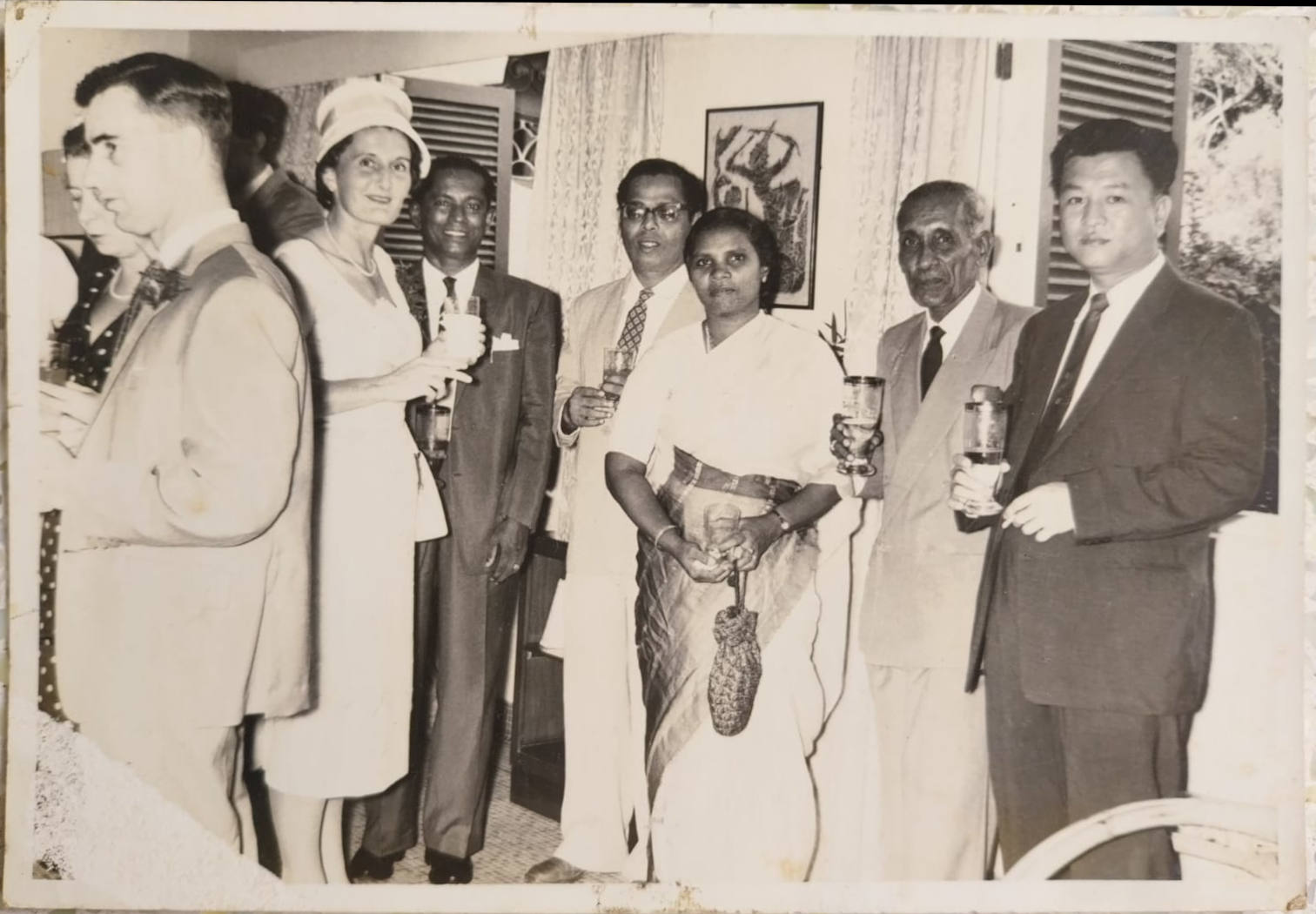
[MAV023] At a work dinner.
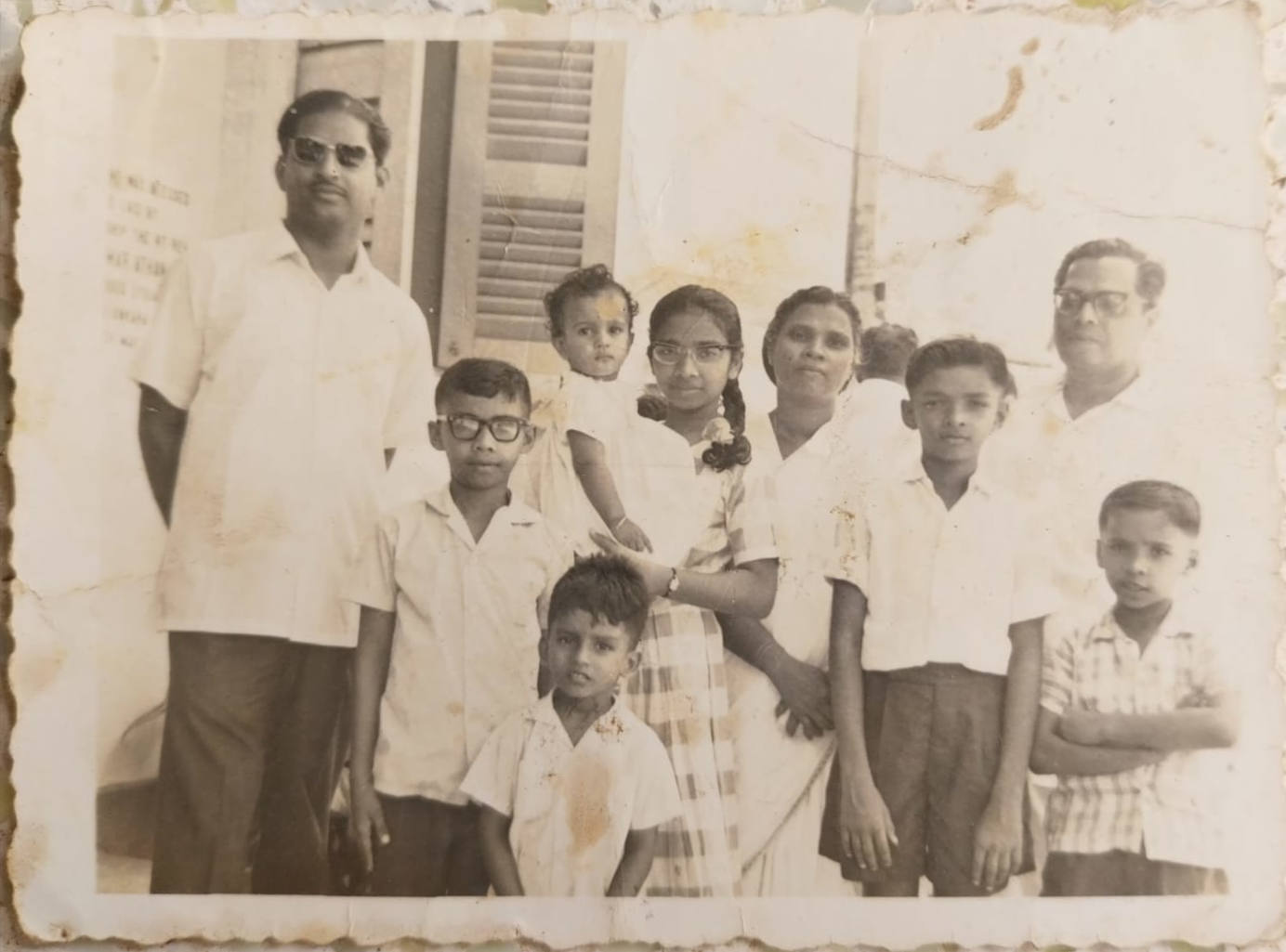
[MAV024] M. A. Varghese with Amini and 4 of the children.
Joseph’s daughter Sumu is in Alice’s arms.
Itty Abraham, K. V. Philip’s youngest son-in-law is on the extreme left.
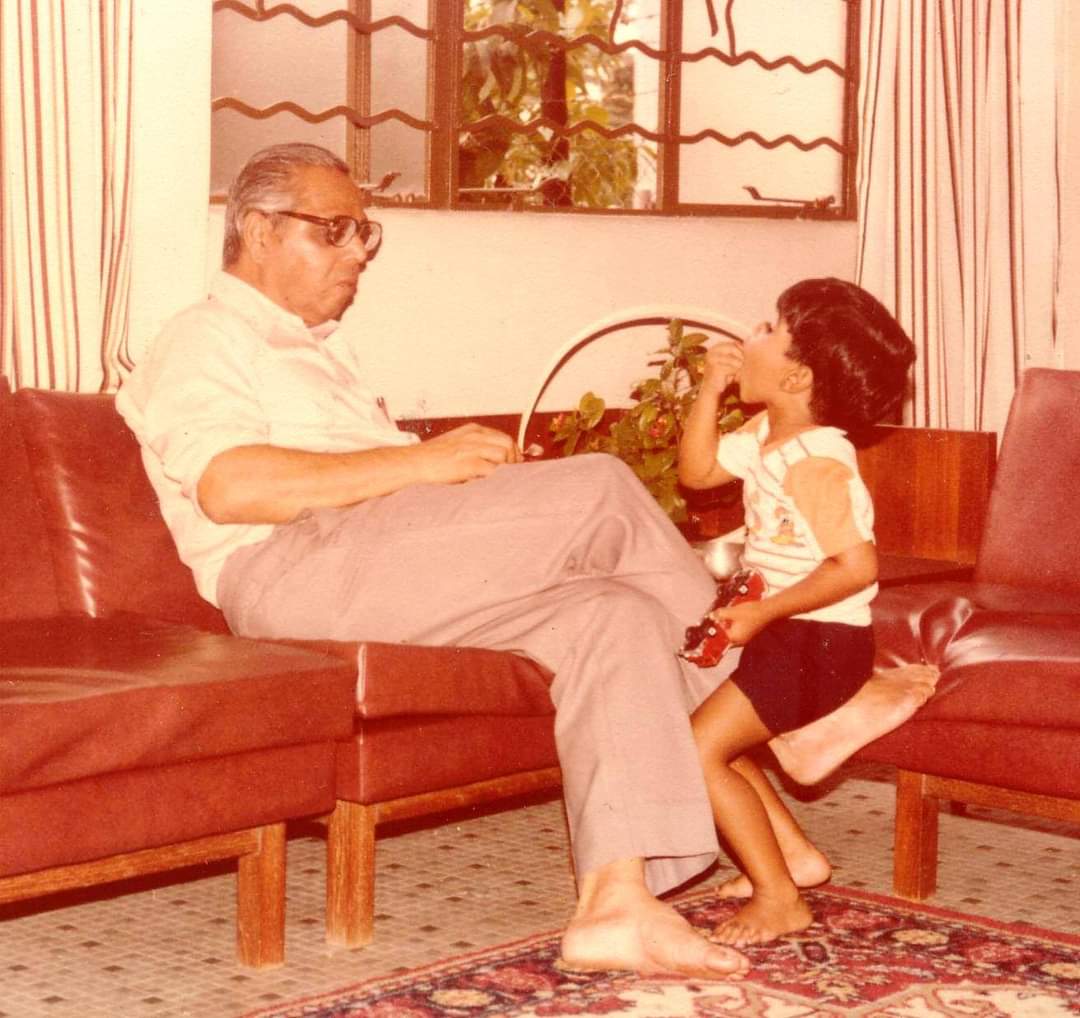
[MAV026] M. A. Varghese with his grandson Nitin - Alice’s second son.
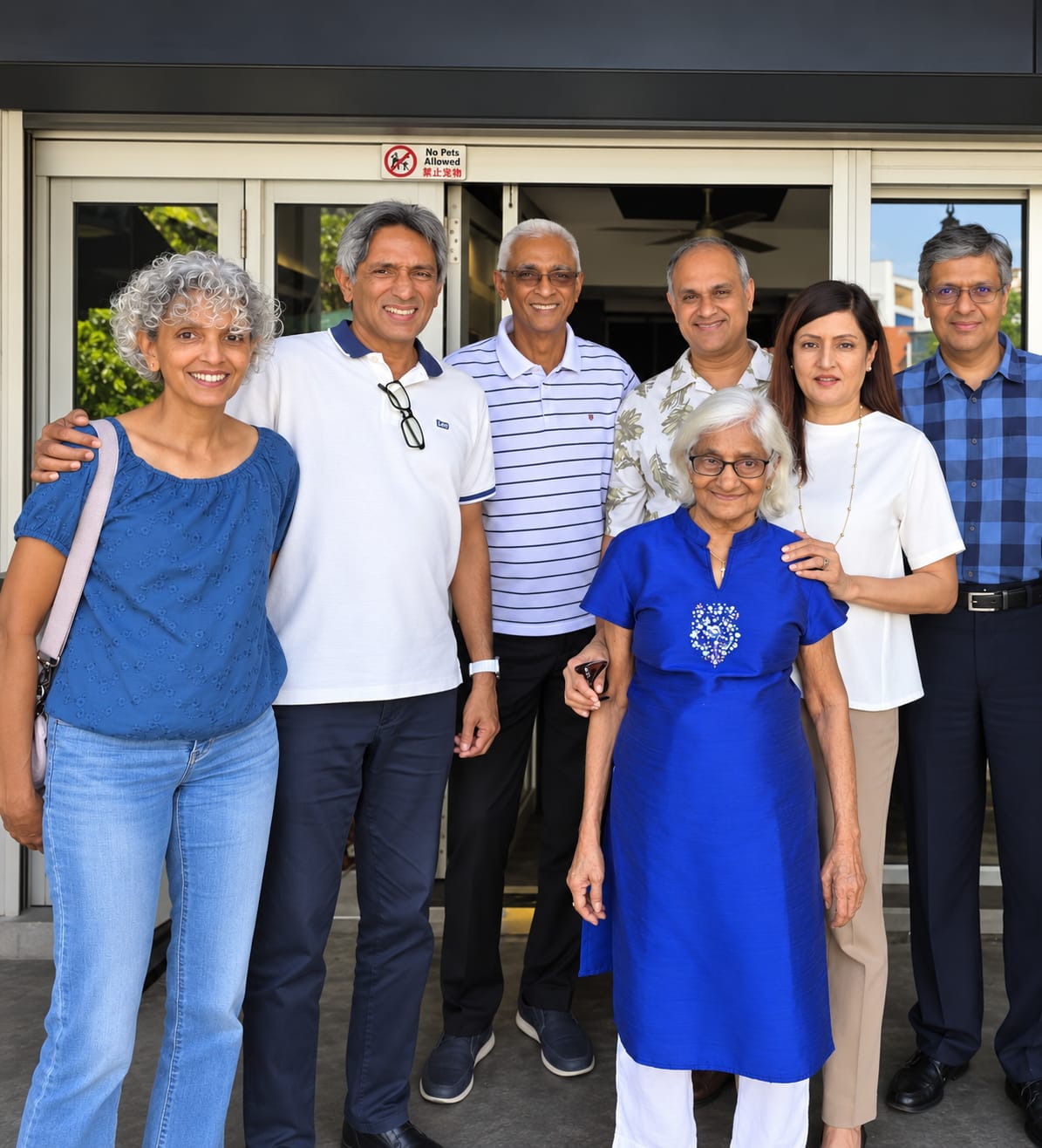
[MAV030] Jolly Kochamma with Roy and the cousins.
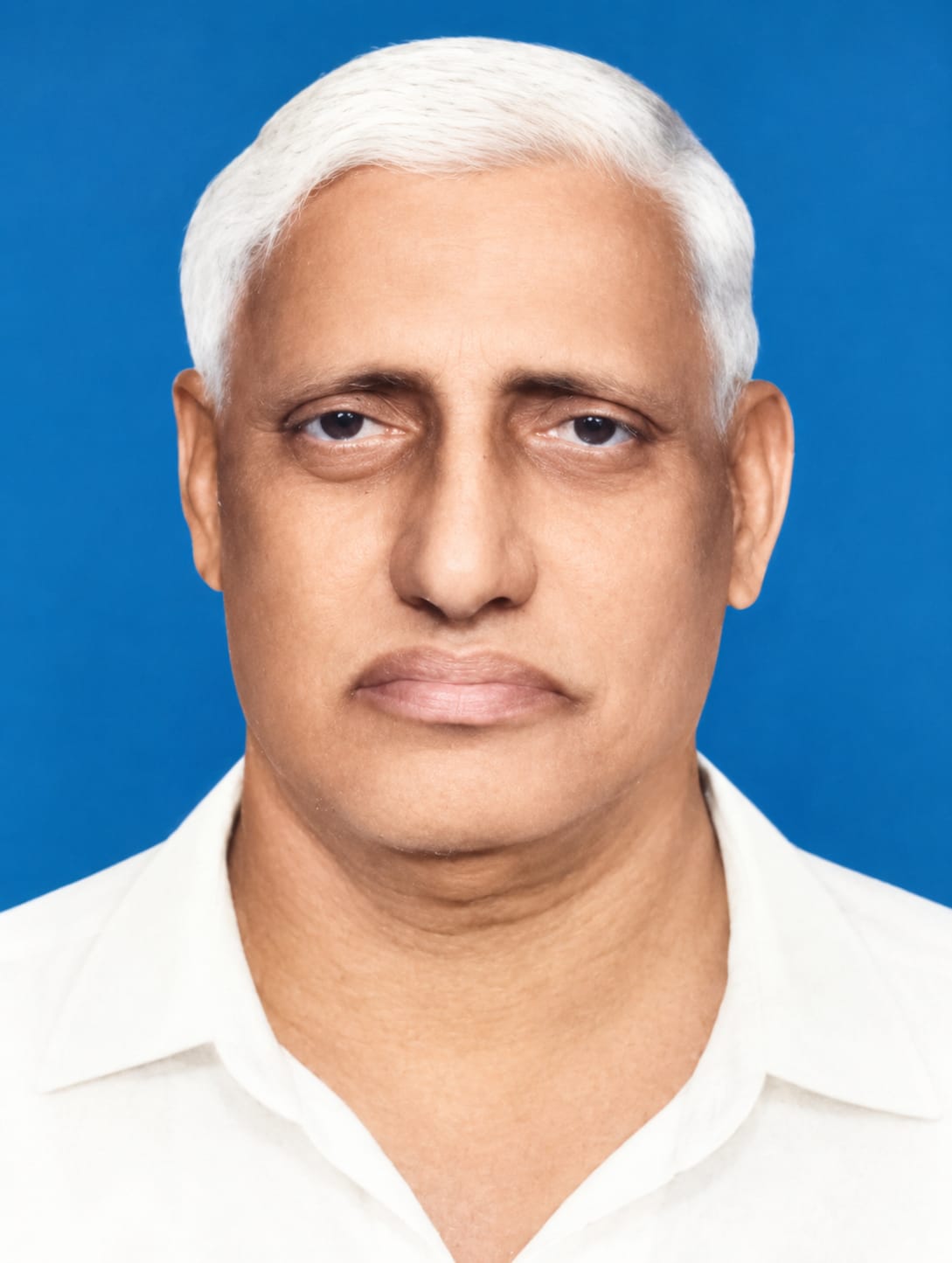
[MAV031] Mr. K. V. Philip (Mepral Appachen).
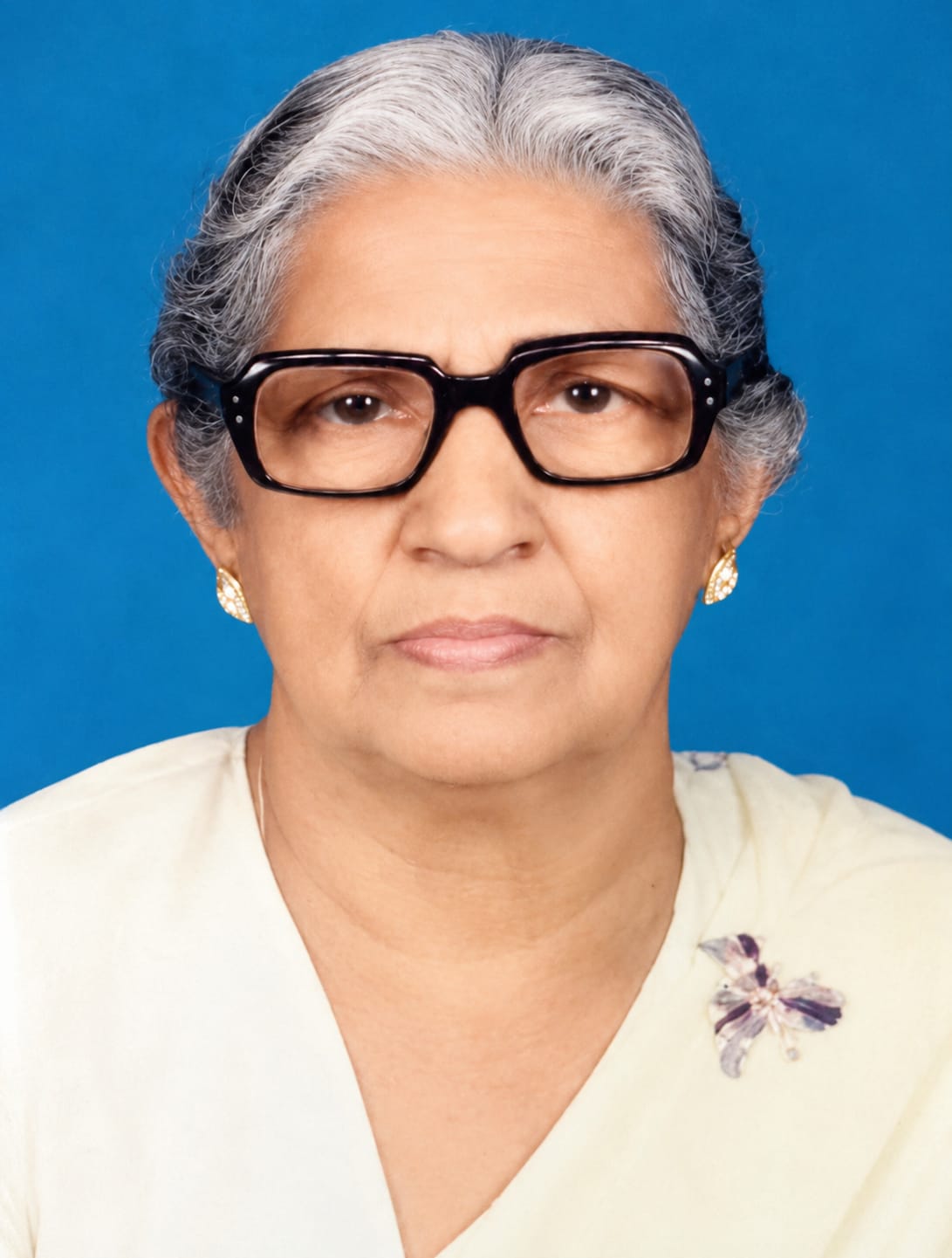
[MAV032] Annama Philip (Mepral Ammachy).
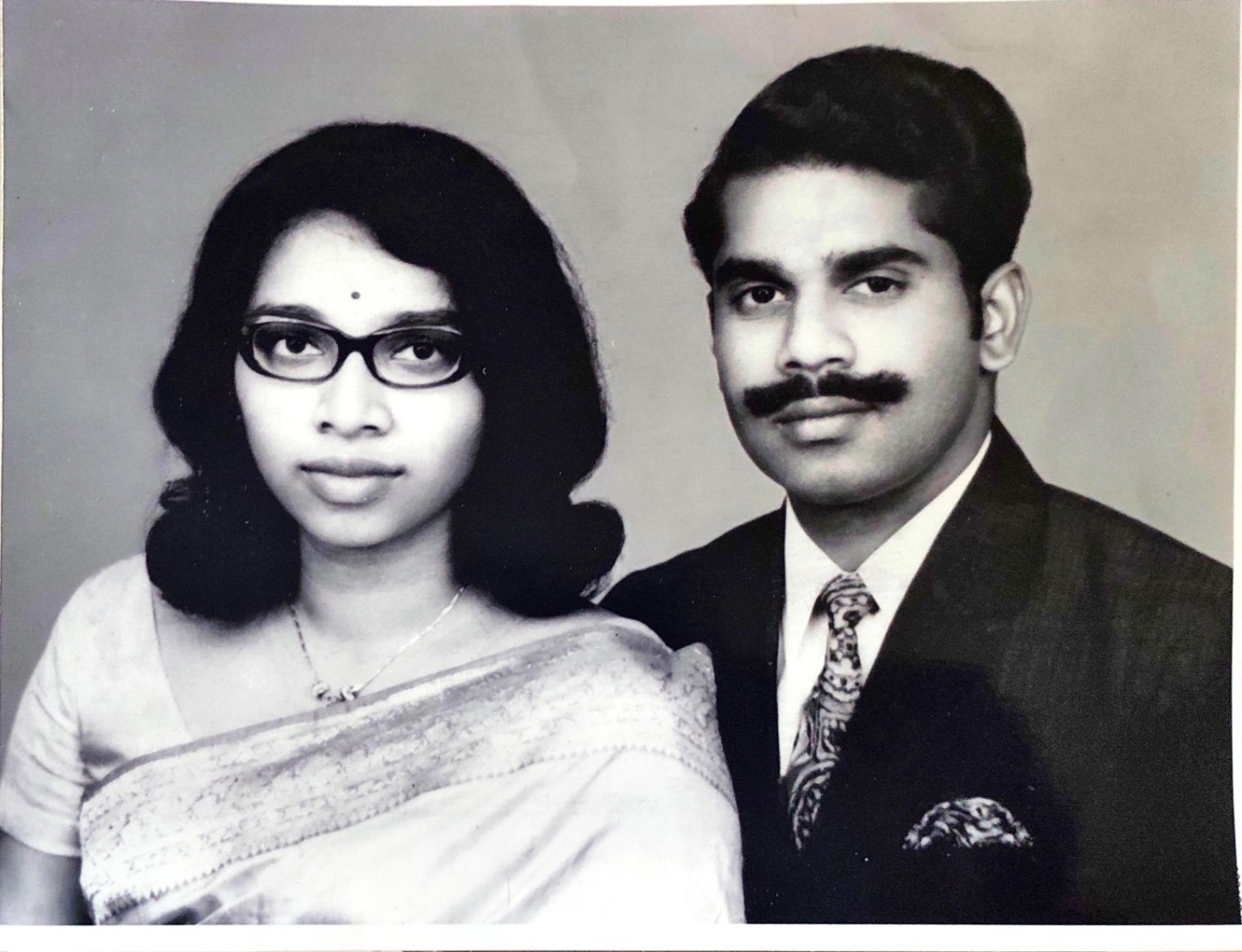
[MAV033] Alice & Tomy (Lt. Col. Thomas Varghese) - Wedding photo.
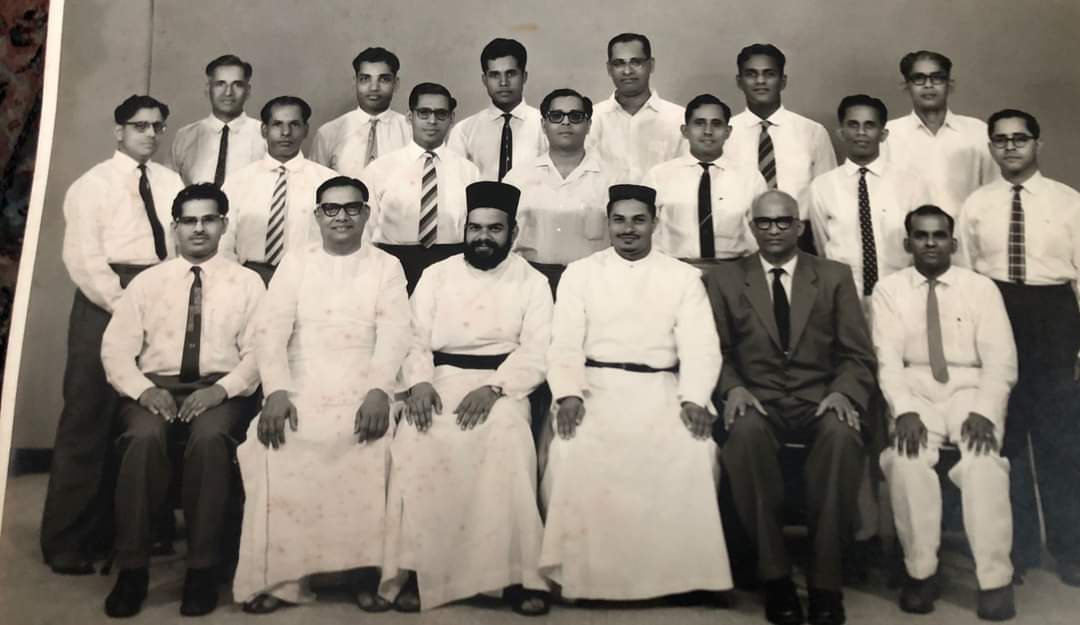
[MAV034] Standing middle row, second from left M.C. Thomas (M. A. Varghese’s eldest son’s father-in-law), third from left M.A. Joseph, fourth from left M.A. Varghese. Sitting from left George Varghese, K.T. Alexander. Standing last row, second from left T.V. George, second from right K.O. George.